Using the process of soldering the equipment used included a piezo disc on top of a brass one, to be used as the contact element itself. As I previously have experience from GCSE of Design technology in which I created and engined a projector and ran circuits through, the process of making the contact mic itself can with ease particularly with soldering as a process. Firstly I split the main blue wire of its rubber insulation and was exposed to three separate wires in which were going tore soldered to. Therefore this stated the ‘tinning’ process in where you heat the wires before soldering to ensure the solder sticks to the wires however this was particularly challenging as the sobering iron itself kept losing heat. Nevertheless I managed to swift ensure the wires were tinned. However as the iron kept becoming cold once touched the shoulder, this introcuded the problem of the soldier becoming dull. This is suboptimal for the microphone to work as it loses its connectivity within this process therefore aiming for a shiny tin was challenging but doable.
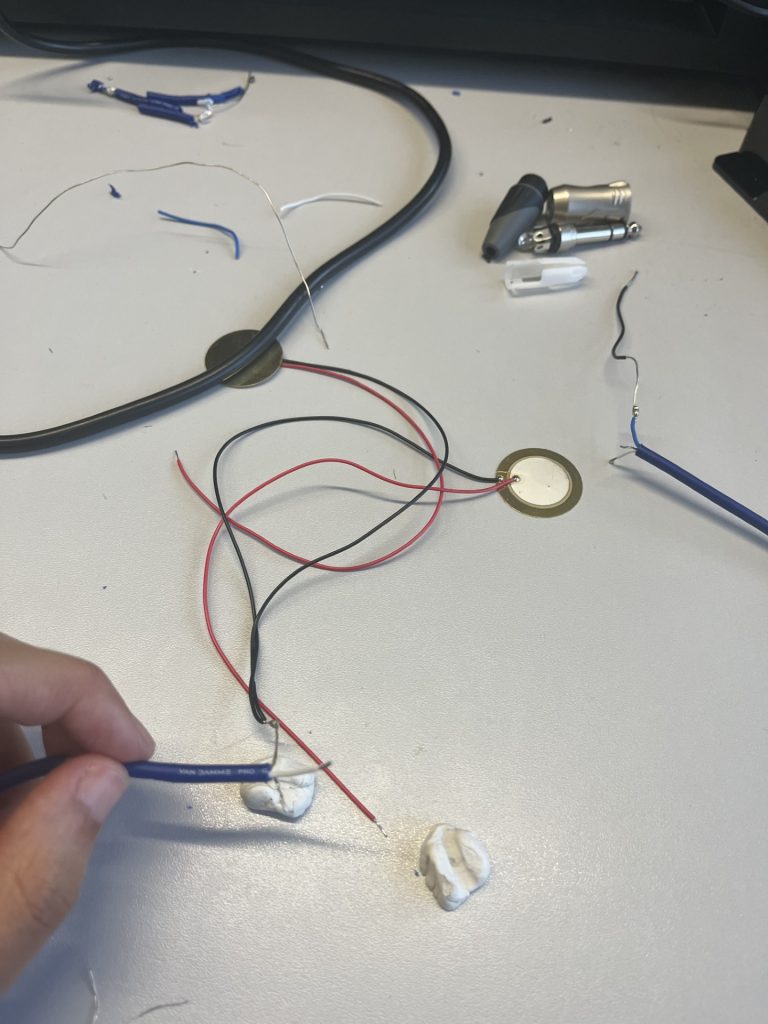
The potential difference between the charged piezo crystal to the brass generates the electromagnetic current when heat is applied or contact, this charge becomes large enough to capture sound. Then we attached the separate red and black wires from the piezo to each separate component whilst the TS jack is used to generate a mono-signal, ideal for projecting sound through a speaker, conventional for microphones.
Next once all the soldering was finished, we hydro-dipped the contacts piezoelectric part of the microphone to create a rubber glaze, insuring that the microphone could still withhold its connectivity whilst simultaneously allowing the microphone to be both water resistant as well as being waterproof.
After the press was done and I took the microphone home, tested out the microphone using my electric guitar, Vox speaker, in which I swiftly discovered by turning up the gain rather than volume, it created distorted effect based more of narrowing the dynamic range for the signal to come though.
Leave a Reply