Author: Yuvrani Atwal

  • Evaluation: Sense of place

    During my process of creating your composition I used a range of non vocal sounds to utilise both percussive and ambient interest. Using a digicam recorder for a more analogue quality, I based my composition off of social spaces applying the brief of sense of place.
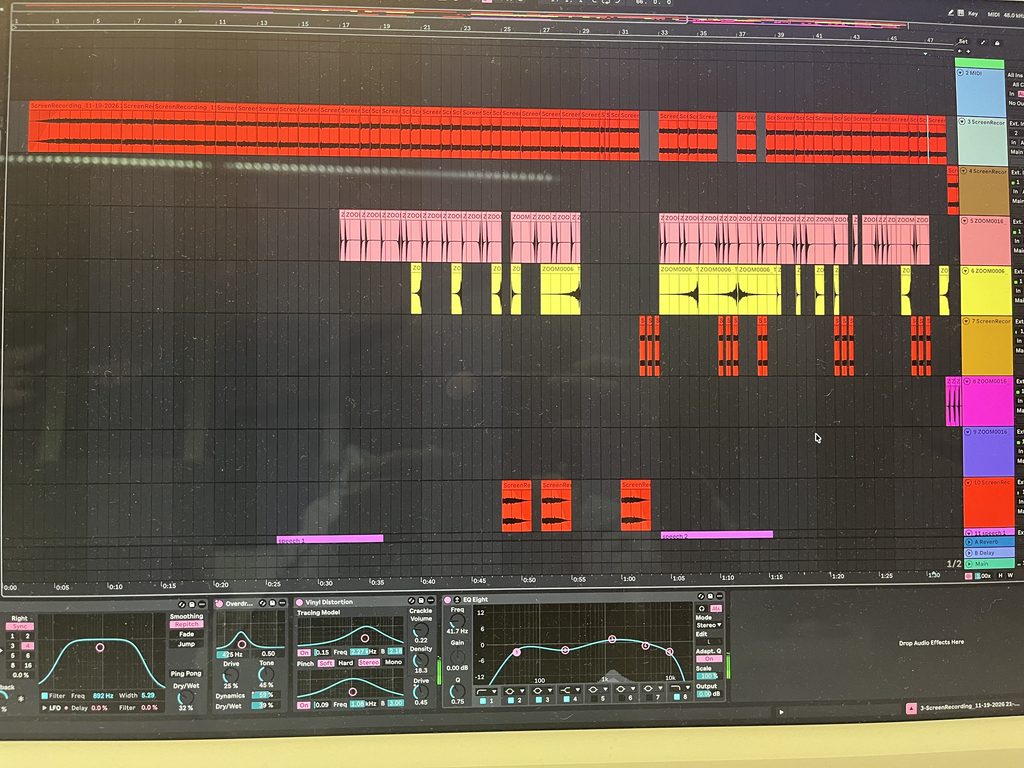
    During the first quarter of my composition I establish the atmosphere of being with friends in a vinyl bar (Cafe 1001 in Shoreditch). This is a regular Wednesday evening hangout for me and a few people in my accommodation where we go and enjoy the environment and the music as a bring your own vinyl night. This drew my attention to use in my composition as it holds sentimental value of having a select few people who simultaneously enjoy being in certain environments on a shared subconscious basis where there’s zero pressure on filling the silence as the air is filled with the noise of other people and the bustling atmosphere.

    I then decided to use a range of looping techniques for this track to be played continuously throughout and I automated a stereo delay effect as the night goes on and the conversation dies down again as on the way home, there is accurately sometimes this feeling of disorientation that goes unsaid.

    For my spoken word on the other hand, I took a more openminded creative approach using the mini descriptions on the back of monster energy cans, solely because I decided to take the idea of comfort and how certain things whether small or big can amass to unexpected periods of time with connotation of comfort. I kept the spoken word predominately clearer to continue establishing a narrative within my piece as I felt compositionally this felt most fitting and I applied little thought past that.
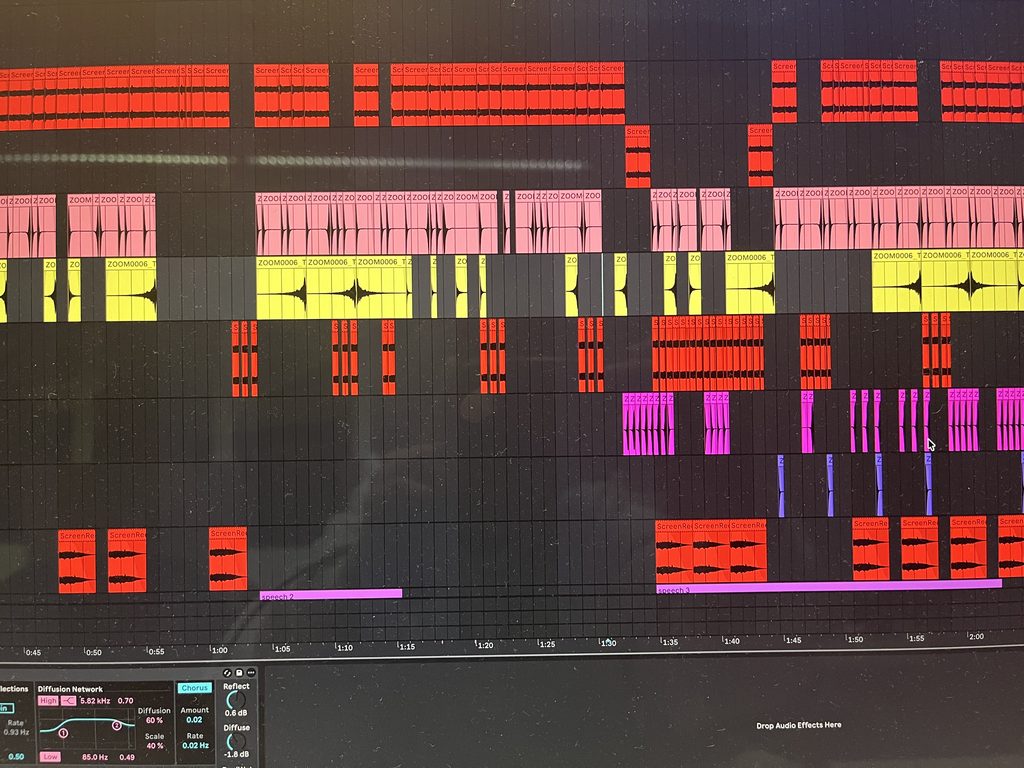
    The percussive sounds arose from lots of EQ to help keep a substantial pacing and I made these sounds purely from tapping or hitting different materials and using pitch shifting and time stretching techniques to ensure a baseline of instrumentation within the piece.I then, to create melodic effects, chopped up and used repeats and reverses to add a layer of depth towards the piece, using the original recording of being in the social environment, and felt a fascination towards how the resonant frequencies of overlapped voices sounded as a whole whilst treating the music in the back as a sample itself.

    I then treated the mix as a whole in conventional ways using EQ, saturation on lower frequency audios, compression and adjusting the gain and keeping the mix distortion and clipping free. Arguably for improvement I could maybe automate more of a street effect and utilise more experimental features along with ensuring the mix stays clean wth each instrument in a space.
  • Loudness quietness and inbetween #5

    All recordings are taken from the first extract of the Kruetza Sonata by Tolstoy.

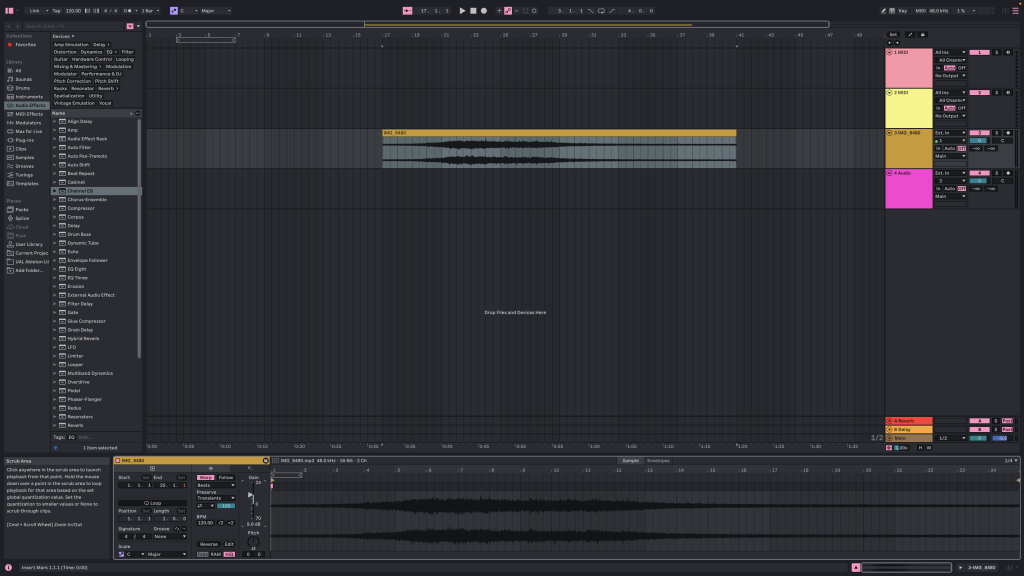
    In my recordings I chose a quiet place being my room whilst using my phone microphone being the standard settings of 44.1khz, the Nyquist standard whilst being 16bit. This is the same sample rate and bit depth as CDS whilst holding lossy quality. However due to the quality being arguably low for a microphone speaker this allows for upsampling and availability to future proof recordings using a DAW.

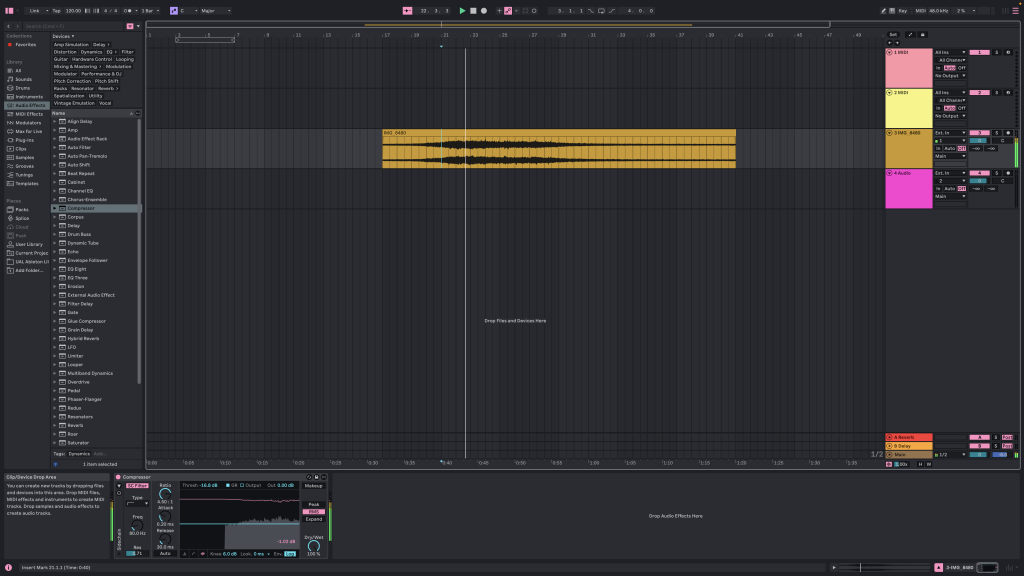
    For the moderately loud area, I chose a local park in where you could hear people walking past as well as general traffic and noises sound elephant and castle however this was a quiet estate for living in London. I then decided to alter my settings using Davincii resolve, a film app I use often when making films where you can adjust the audio settings as well as visuals. It offers conversion to lossless audio so I did so and converted the file into 48khz. Not much sounded different however lossy to lossless always offers extra benefits and when listening to more direct music, offers a clearly sound with more clarity to the mix.

    Finally I decided for a louder area, to enter a train station entrance as there was direct dialogue in the background. Not only this but this range of ambient noise as well as dialogue helped widen the frequency spectra of the recoding itself. With the beeping of the train gates long with the passing underground, as well as the outside world, this offered a place n where the noise floor of the recording itself would already be quite high. I began running out of storage however this wasn’t a problem overall but my clip was cut sort. However due the loudness of my surroundings I had become hyperaware of y own dialogue as people were next to me as well as theirs making it hard t read. However I then decided to use a higher sample rate, past 48khz. Being 96khz although unable to hear unless needing to use a large amount of manipulation, the process itself ensures future proofing if needed.

    I notice as a reoccurring theme that voices and the general public could be a way of establishing a baseline for composition reasons for the sound study, as through also reading the prior extracts that reference everyday life I am becoming hyperaware more of what our ears filter out with the differences in noise and separation of what classifies as “noise” and what has true sonic potential.

  • Week 6 Blog

    “Suburban life is the completion of a long evolution of the home, and the concept of interiority, with the modern tract home acting as a logical sanctuary to the urban milieu with all its simultaneous relations experiences and demands.”

    In this quote gathered from Acoustic Territories/Sound Culture and everyday life by Brandon Labelle, Chapter 2 explores the home and its ethical volumes of silence and noise. Here Labelle is referencing the difference between suburban life with the domestic space as a “retreat” in his words being ‘sanctuary’ whilst also noting that the domestic, homely space is also everchanging through the use “long evolution”. This hints that the similarities between both the urban life and domestic life is that they are both continuously changing whilst clarifying that the way humans process an interior being the “safe space”, where no expectations should be held, still contain the demands of the urban world solely through the structure of the urban world itself and its standards in everyday life, he could here be referencing career, status, economically etc…through experience is still inevitably dragged back home. He expresses this observation as a critique of the middle class structure by subverting our prior expectations that the home is safe from urban expectations and instead creates a perspective that the “noise” of the outside world is still dragged into the domestic life through the capitalist structure itself.

    E-Book

    Chapter 2, Page 51
    Acoustic Territories
    by Brandon LaBelle

    ISBN: 9781441177254

    Publication Date: 2010-04-01

    Rewrite- The expectations that the domestic sphere is a retreat from the 9-5, working life in which society operates off of, holds the same indistinguishable expectations regardless of the comfort felt once placed back inside the home itself and the idea of interiority does not shelter one from the suburban structure regardless of how developed the home itself is.

    Personal Stance (bibliographic entry)- The quote itself holds a perspective entirely new to me as i had always viewed a separation on the standards of society itself whether it be career wise or economically however it raises the idea that home isn’t as comforting as it arguably should be. upon reflection, the domestic space and the idea of expectations is not much different to the urban life that Labelle addresses and i think slowly this is through the way that status as a wehole is labelled is dragged into the interior space rather than vice versa as if someone should have a good well respected career, this is brough bacl to the family homer and then a level of expectation is, agreeably to Labelles point, placed onto that person.

  • Microphones #3

    Torgue, H., (2005) Sonic Experience: A guide to everyday sounds

    Schafer, M. (1994) The Soundscape: Our Sonic Environment and The Tuning of the World

    Toop, D. (1995). Ocean of sound: aether talk, ambient sound and imaginary worlds.

    As i read Torgues, in the silence of my room, i noticed the topic of the extract i chose was particularly focused on acoustics in where he explains that for a sound to be masked it must be masked by a lower level frequency sound. During my recording i noticed that due to the lack of sounds around me past cars below me or the trains that constantly pass by, my voice began to have less clarity when reading. However this brought my attention to being hyperaware of everyday sounds around me, in which the extract had almost intentionally made happen. It talks of tonality and that regardless of tone being either complex or pure, through language also, sounds can be masked by most environmental factors within ordinary life. Linking directly to a sense of place as arguably sound keeps people grounded within an environment regardless of if their own voice is masked due to how the environment itself has its own noises with different frequencies.

    I then read Schafers soundscape in where, I decided to pick a moderately loud place being a supermarket, this atmosphere in itself holds a dense range of noise and sound in itself, In the extract Schafer talks about the Paris expositions, being a range of expositions celebrating and drawing list upon different decorative arts, music etc. As I walked around I began feeling more self conscious, particularly from the fact that I had no headphones on a I was mainly just speaking at my phone. However I noticed quickly the difference in voices around me along with the idea of atmospheres and how that can amplify in this case, the customer experience. Entirely through commercial sounding music and the idea of nostalgia from the thin sounding speakers that supermarkets have, along with the people themselves also shopping, it creates an experience ambience that otherwise not be there.

    In Toops Ocean of sound in a loud place, being near a fountain outside with the hustle and bustle of the city, including drilling and road noise. where i began reading the extract of Sun Ras dream. In Sun Ras dream, he explains that he has found jewellery that defies the expectation of “description” and goes on to explain that this jewellery doesn’t hold itself to the bounds of the universe, in which there are also no walls. This drew me back to the idea of atmospheres and ambiences within everyday life as it felt as if sound has no barrier and no limitations, in a volume sense on this earth humans can then only process what our brains are capable of. This created the idea that identity is limited to what the physical body can comprehend or is capable of and from a sound perspective, our place and identity is only so much as human which we become hyperaware of during louder settings.

  • Personal statement #2

    In my passion of sound design and sound as a whole I create a fluid working ability to adapt to any role within sound and music as a whole, through my background in tutoring and sharing my knowledge to younger generations i possess the understanding of not only teaching applications but understand the importance of being able to adapt the visual world to fit with the sound world and allow them to work together rather than separately. This brings me to my end goal being to be able to design music for film or fashion, whether it be advert or trailers, my work possesses a key theme of taking the pre-existing visual world and enhancing with the sound world itself through instrumental music, dependant not only on guitars but i gradually hold a high interest in electronic music due to its ability to hold and evolve sounds to fit in the mould of interest. Put simply the creation of material and the physical through a sound model where it is felt on an aural level the true dimensions of an object. I am keen to practice and learn more of how i can make my passion a place of perfection learning from basics to beyond an intermediate level and am aware of challenges of this being particularly learning new and different DAWs however this all in all means i have more knowledge and more freedom to express my work in ways i couldnt have before. This could also allow me to draw on new ideas for my work and bring all elements of my pre-existing knowledge together in ways i cannot yet foresee yet this creates an avenue of curiosity to grow within my work, being a chain reaction toward bigger and even more places of interest.(#2)

  • Guest Lecture Flora Yin Wong #5

    Flora Yin Wong and her work as what she describes as neither a sound artist or a musician was a particularly interesting guest lecture to me due to her approach towards making her compositional pieces themselves along with her interest in ritual practices and using spatial audio and sampling to create a deeper philosophical soundscape or composition as her way of expression.

    I found her work on Gut, the Korean Shamanic ritual, Water, Bells and Chants particularly fascinating as typically the origins of the ritual stemming from a shaman mediating between the human and spirit worlds. Acting as a way of restoration of balance, protecting villages, guiding the dead or curing spiritual illness particularly interesting as she takes the bells from the ritual and creates a sound piece which feels particularly disorientating and dark. Using her phone to record most if her work, she manipulates the spatial field to create a wide mix whilst maintaining her artistic vision and applying her own philosophical context and reasoning for her works. She creates a hypnotic state by looping the bells pushing the meaning of the ritual itself further particularly in the context of sacrificial offerings which Gut can be used for. I also found her approach to gathering the audio themselves interesting as she goes to the events where rituals may be held and experiences them with the people too along with the inspiration from writing to establish her sound work as ideas themselves which is unconventional from the typical sound artist approach as she holds a more open minded way of creating and manipulating her compositions.

    Her work Three Eyed Flame also sparks my interest as it holds a combination of Spanish during the introduction and moves towards a Sanskrit filled mantra like immersive experience to retell an ancient story of Siva in never ending dance with Sakti. Flora uses overlapping vocals and a string-like [possibly synth] instrument to demonstrate how the story unfolds and sonically reflects the moods or state of being within the story itself. This is particularly interesting to me as upon reading the descriptive notes that align with the track itself, the connotations in which Flora attempts to portray seem increasingly accurate as her ability to set and create the atmosphere within her work, based primarily off using oral traditions and ritualistic practices as framework are extremely inspiring. Creating a sound field whilst listening that is truly reflective of the energies within the story itself whilst not overcomplicating the process and sticking to her themes in an auteur like fashion.

  • Location sound and recording #6

    I hired out a Rode NTG 5 condenser field mic recorder from the kit room and used the boom attachment along with the others on the end and experimented with adjusting gain levels along with how compression changes the atmosphere itself. Initially due to the microphone being a condenser my assumptions were that it would be sensitive due to its wide frequency response being the full spectre of human hearing in which i was correct.

    Firstly i attempted to record my room and see how sensitive the microphone was to what human ears would call silence, the microphone picked up a continuous hum possibly from the lights above me and any shifting noises that i made during recording i noticed this as it was connected to a small device which showed the waveforms themselves in real time. I also using headphones then opened my window in which i am next to the overground and a lot of noise tends to come through when it is coming.

    When i pushed the gain up, this accentuated the noise floor lots as it already is an extremely sensitive microphone and created artefacts and distortion but not in a desirable way and had a more white noise effect.

    When i then used a compressor, the dynamic range narrowed even further as it increased most of the room noise as the train itself passed by creating more distortion unless heavily compressed. Drawing my attention here towards how compression can be demonised within mixes for when things are too processed, yet narrowing the dynamic range when applied to a more ambient context can be something of use in my composition.

    Then i decided to use a limiter so only the peaks would be cut once it had hit over the different decibel settings i applied, typically above -10dbs. However using a limiter in this way to this extreme extent introduced clipping therefore automating or manually adjusting the gain helped when the train passed by instead of using a compressor or plugin. Not much changed in terms of clarity of recording when i changed each attachment therefore the dynamic range was extremely wide only when the train passed as it accurately picked up every sound that was made whether in a quiet or louder environment raising the noise floor.

  • Off campus visit- Longplayer. #4

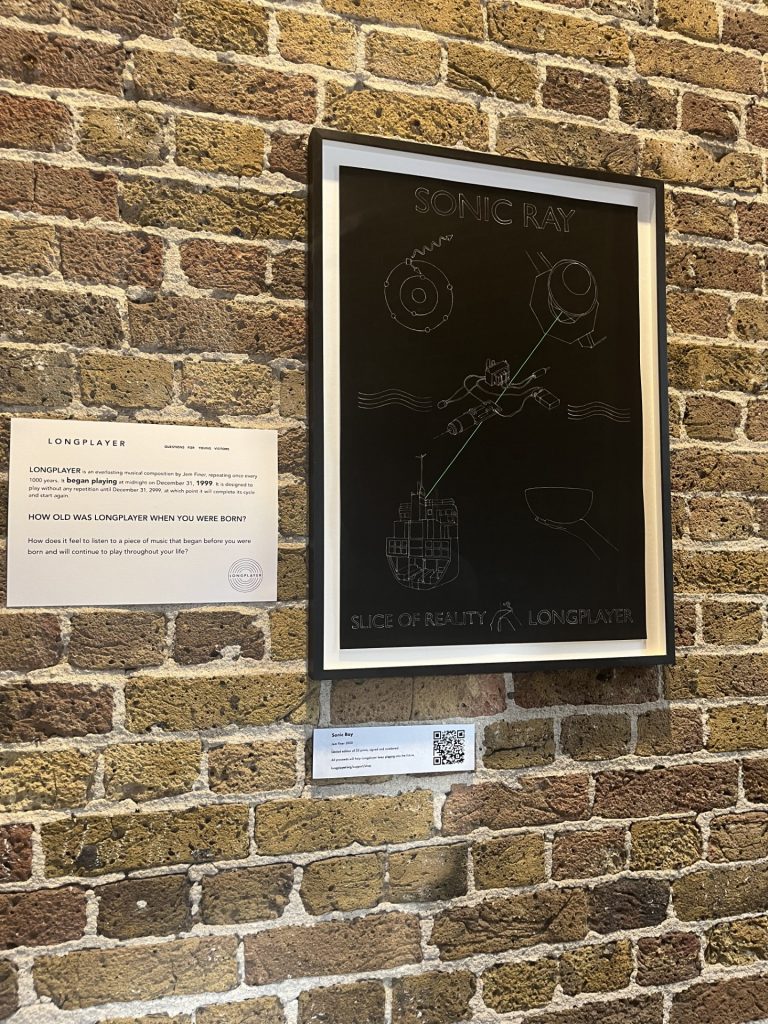
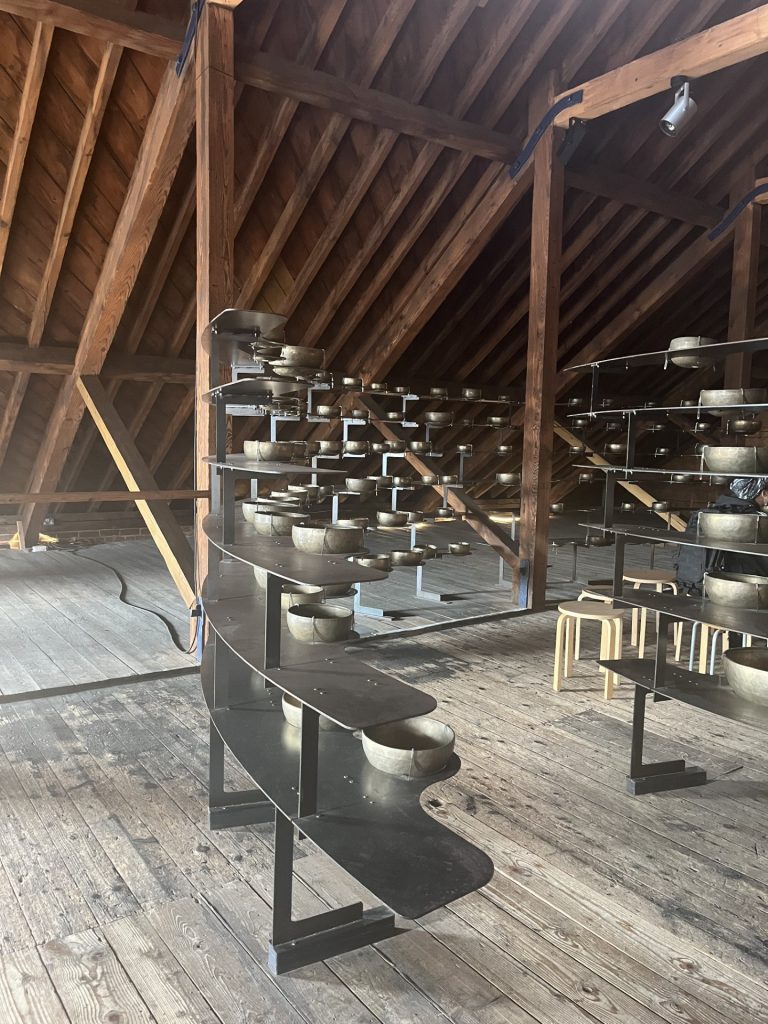
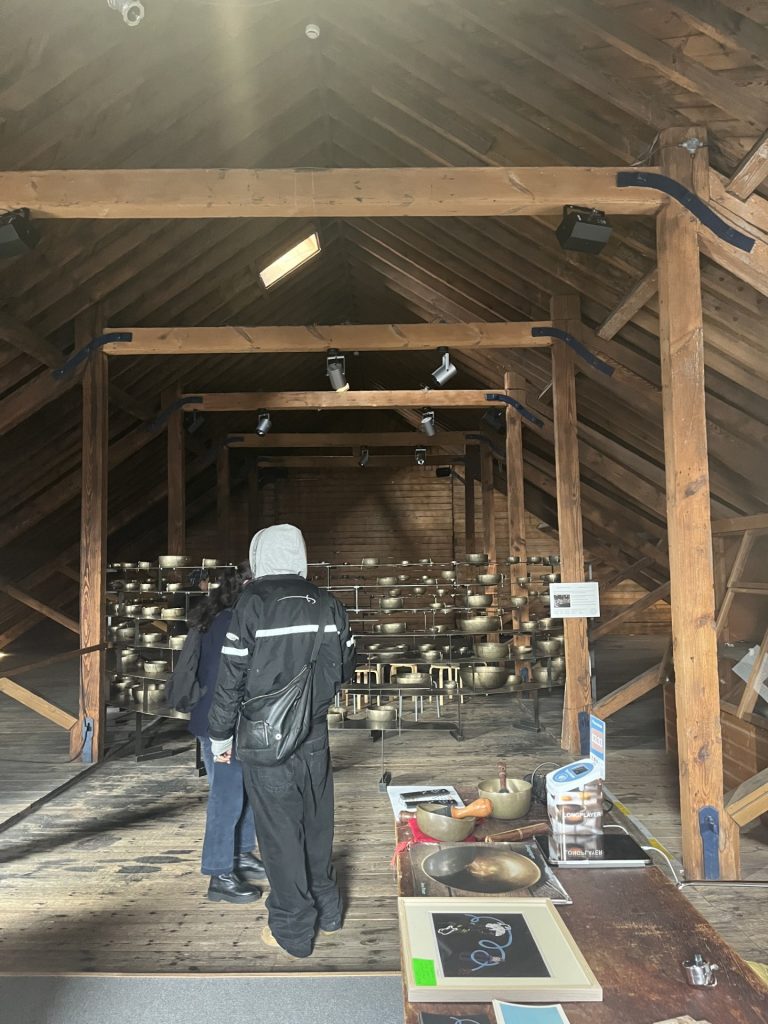
    The longplayer is an interesting sound exhibition with the intention of being played for an entire millennium. This means that someone has to sustain and ensure the art itself is preserved. Not only this but the guest speaker explained to us that the longplayer as an instrument is played in an orchestral context therefore needing musicians to learn how to play it accurately. She explained how it works being, an arrangement of sound bowls which play at different speeds creating a full sound whilst also never repeating, therefore using as time-stretching algorithm.

    I personally found the longplayer interesting yet it raised many questions on the future itself being is preservation even possible in an ever changing world especially with the technological advancements and introduction of AI in the modern world. The long player had been playing constantly for around 26 years, creating a feeling of legacy and raising more questions of if legacy is important or if it is merely a concept not only this but the idea that one can pay to have an etching in the bowls themselves seems a merge of materialistic whilst simultaneously being a “peace of mind” concept as a millennium could feel the same as neverending. Personally i disagree that the longplayer will be preserved truly and purely due to the nature of human beings and the changing external environments along with ideas of funding however i found the choice of using sound bowls a good idea as they have existed in many cultures for many years and are an ancient artefact themselves making it easier to preserve due to them being made of brass or bronze. However i agree that as a concept it feels humane to want and wish and attempt to create something to last 1000 years in itself.

    We also played the sound bowls ourselves in an arrangement using four bowls, this was important to help understand how the long player works as the first player plays on the first beat in a 4/5 arrangement with the 4th player playing every 5th beat, this ensures the cycle doesn’t repeat, similar to the longplayer. The resonant frequencies of the longplayer itself certainly create a peaceful and light attitude and a calming environment that could surpass its initial concept in itself even to be enjoyed as an arrangement, free from its concept due to the nature of the sound bowls themselves as the lack of repetition within the “composition” keeps a fluid and soothing atmosphere.

  • Surrealism- #3

  • Contact Mic making. #4

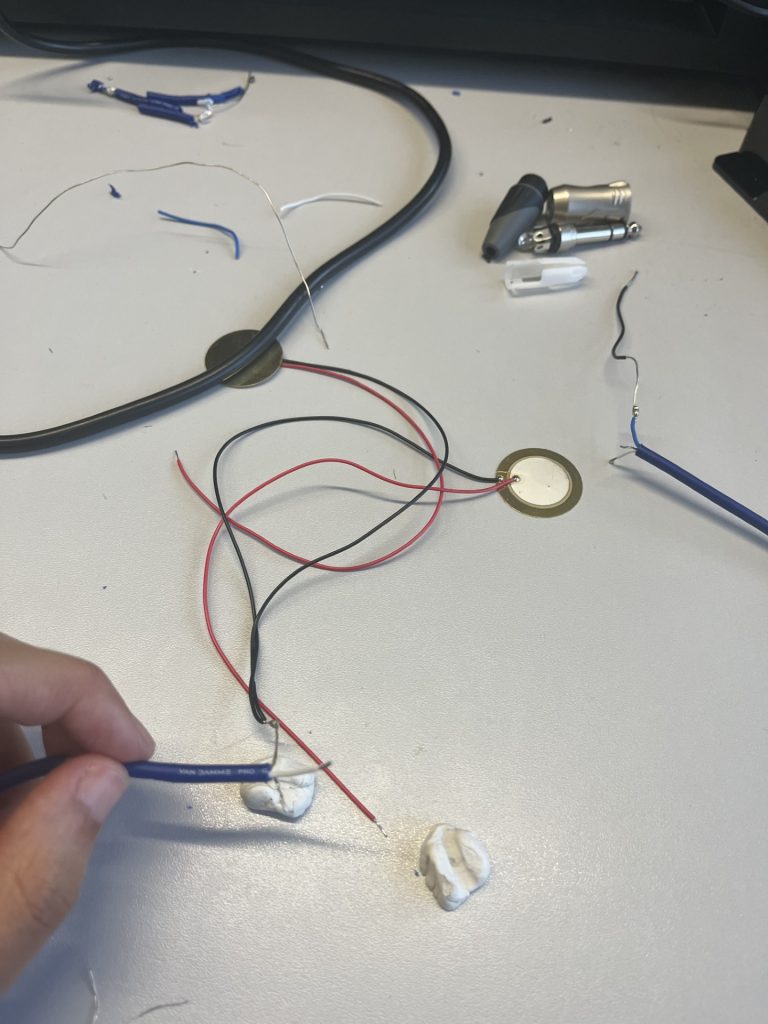
    Next once all the soldering was finished, we hydro-dipped the contacts piezoelectric part of the microphone to create a rubber glaze, insuring that the microphone could still withhold its connectivity whilst simultaneously allowing the microphone to be both water resistant as well as being waterproof.

    After the press was done and I took the microphone home, tested out the microphone using my electric guitar, Vox speaker, in which I swiftly discovered by turning up the gain rather than volume, it created distorted effect based more of narrowing the dynamic range for the signal to come though.